
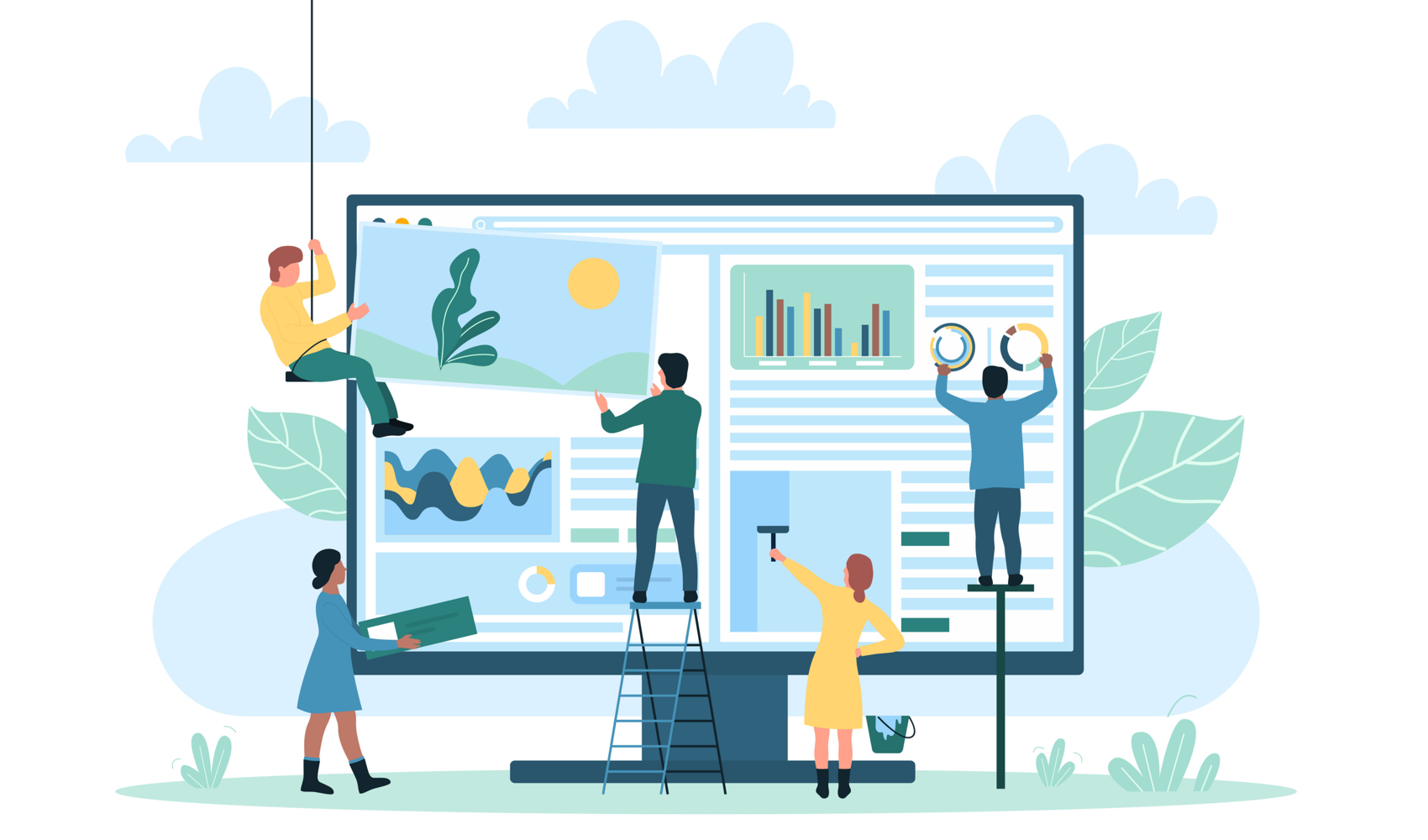
The line between designer and client is no longer as clear as it once was. With platforms like Drupal, WordPress, Shopify, Salesforce, Acquia Site Studio, and Squarespace, clients are shaping digital experiences every day, often without realizing how much design work they are doing.
They are not just reviewing and approving anymore. They are dragging and dropping components, styling layouts, and writing headlines. Whether they mean to or not, they are designing.
This shift brings challenges, but it also creates new opportunities.
From Deliverables to Design Mindsets
At Clarity Partners, we often work with public-sector, nonprofit, and private clients to improve digital experiences. Over time, we have learned that delivering a strong website is only part of the job. The real success comes when clients know how to use the tools we provide and feel confident doing so.
Clients do not need to be protected from design decisions; they need the right support. With the right language, tools, and training, they can make smart choices long after launch.
With these changes, our role has also evolved. We are not just designers anymore; we are coaches, system thinkers, and trusted guides.
Why This Shift Matters
Modern content management systems give clients more flexibility than ever before. That flexibility is powerful, but without direction, it can also become overwhelming. Many clients fall back on what they know, like PDFs, brochures, and one-off pages. But digital content is not static. It is part of a living, breathing system.
When clients approach digital tools with a print-based mindset, the result is often cluttered layouts, confusing navigation, and inconsistent user experiences. Our job is not to limit creativity. It is to help clients use their creativity within a clear structure.
We encourage a shift from thinking about how a page should look to thinking about how to solve a problem using what is already in the system.
As clients gain confidence, their questions shift too. Instead of asking:
- Does this look good?
They start asking:
- Does this work well on mobile?
- Can we reuse this layout elsewhere?
- Is this easy to understand and accessible?
That is when the mindset starts to change. Clients stop asking for custom layouts and begin using reusable tools to build consistent, effective content.
A Shared Content Compass: Four Goals That Guide Every Decision
We use four core principles to help clients create content that works. These goals guide both design and content decisions.
Goal #1: Responsiveness
More than 60 percent of web traffic now comes from mobile devices. In the public and nonprofit sectors, that number is often even higher.
Responsive design is not just about shrinking layouts to fit a smaller screen. It is about helping users get what they need quickly and clearly, no matter what device they are using. Important actions should appear early in the scroll, and content should follow a logical order.
Google reports that 80 percent of users will leave a site that is not mobile-friendly. For service-based organizations, that is not just a usability issue. It is a barrier to access.
Goal #2: Reusability
Some clients worry that using the same layouts will make everything feel too uniform. But reusability is what keeps large websites manageable. Reusable components reduce errors, speed up publishing, and create consistency across hundreds of pages. Instead of redesigning every page, teams can focus on crafting better content. This structure does not limit creativity, it channels it. And for users, consistency builds trust.
Goal #3: Scannability
Most users do not read every word on a page. Research shows that they read only about 20 to 28 percent of the content.
That is why we encourage content that is easy to scan. This includes:
- Clear and descriptive headings
- Short, purposeful paragraphs
- Bullet points that highlight key information
Scannable content helps everyone. It supports users with limited time, lower reading levels, or those using assistive technology. Government websites often aim for a 5th to 6th grade reading level. This style of writing helps meet that goal without diluting the message.
It also improves access for users dealing with time-sensitive or high-stress tasks, like finding deadlines, services, or emergency information.
Goal #4: Accessibility
The CDC reports that one in four adults in the United States lives with a disability. Accessibility is not a feature for a small group. It is essential for a large part of your audience.
Designing for accessibility benefits everyone. For example:
- Proper heading levels help screen reader users and people skimming on phones
- Alt text improves experiences for blind users and boosts search engine visibility
- Larger buttons help people with motor impairments and make mobile use easier
Accessibility should be part of every system from the start. It should be built into the way components are designed, tested, and used. When accessibility is treated as a foundation instead of an add-on, it becomes second nature for content creators.
Coaching Clients into Confidence
We do not just hand off a system and walk away. We work with clients so they understand how to use what we have built.
That includes:
- Introducing modular thinking early in the process
- Using visuals and templates to show how content should come together
- Creating internal champions who can help coach their teams
- Building accessibility into the components themselves, not just into the documentation
This process is not about perfection; it is about building confidence. Confident clients create better content and take more ownership of their platforms.
Designing a Legacy, Not Just a Launch
A successful project does not end with a website going live. It ends with a team that knows how to manage it, improve it, and grow with it.
Clients who think in systems create more consistent experiences, reduce long-term maintenance, and strengthen their organization’s voice. They stop thinking of their website as a finished product and start treating it as a living tool.
That shift is what creates long-term value. It is not just about launching a website. It is about building a mindset that lasts.
And that is how great design keeps working, long after we have stepped away.
About Clarity Partners
Clarity Partners is a Chicago-based, full-service management and information technology consulting firm that specializes in delivering comprehensive solutions to complex public sector and non-profit challenges. We provide management consulting, enterprise performance management, application development, website design and development, cloud solutions, project management, and IT staffing services to a diverse mix of businesses across the full spectrum of industries.